

In a secular world, the dance floor is one of the final frontiers for transcendent experience. VOL. I of MODERN RITUALS is a serialised six-part essay that brings this into urgent focus.
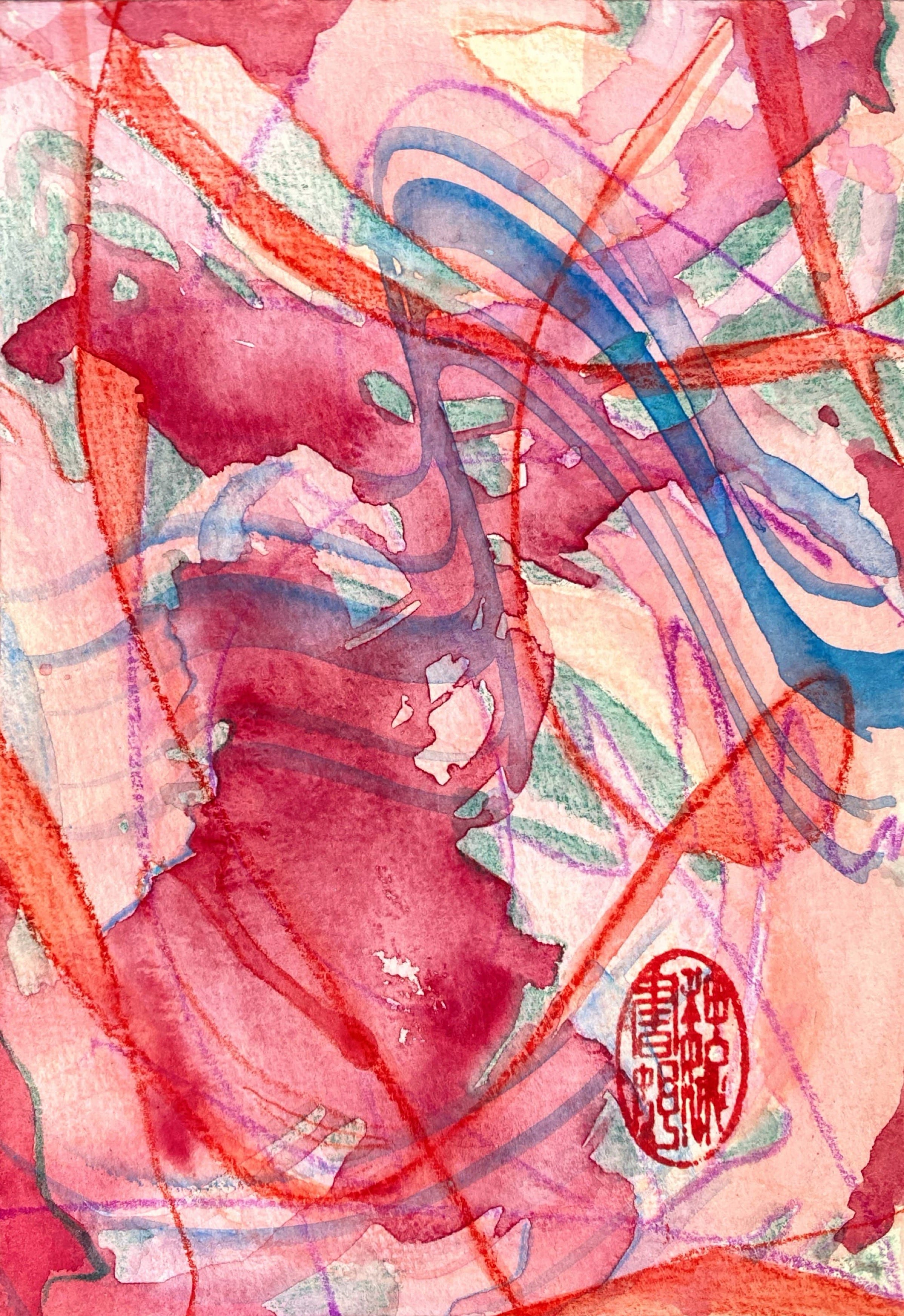
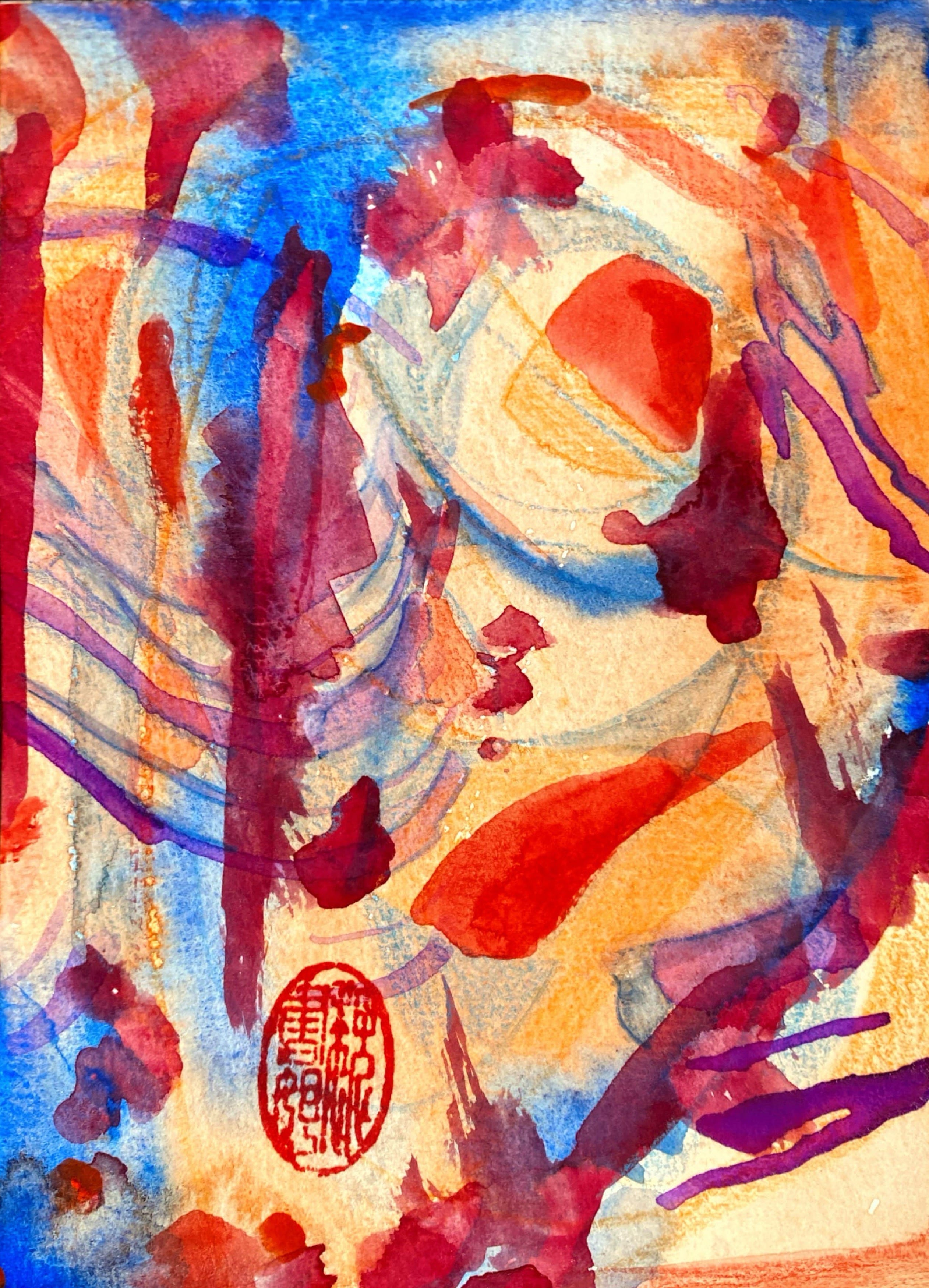
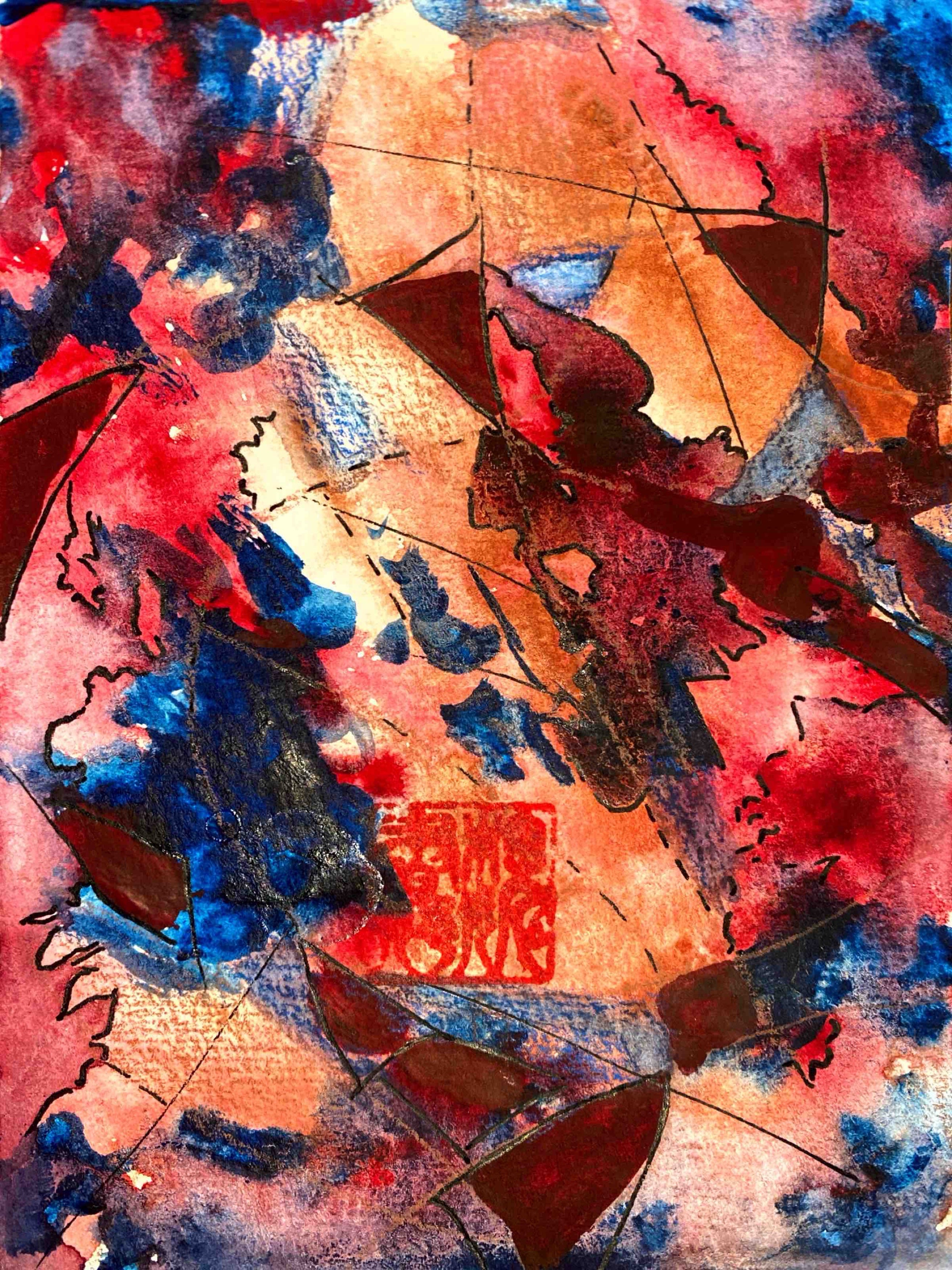
Sustaining the attention span to comprehend these texts is an act of resistance in itself. Each article is accompanied by original abstract paintings, also by Whitney Wei. All essays are available, read aloud, in audio format.
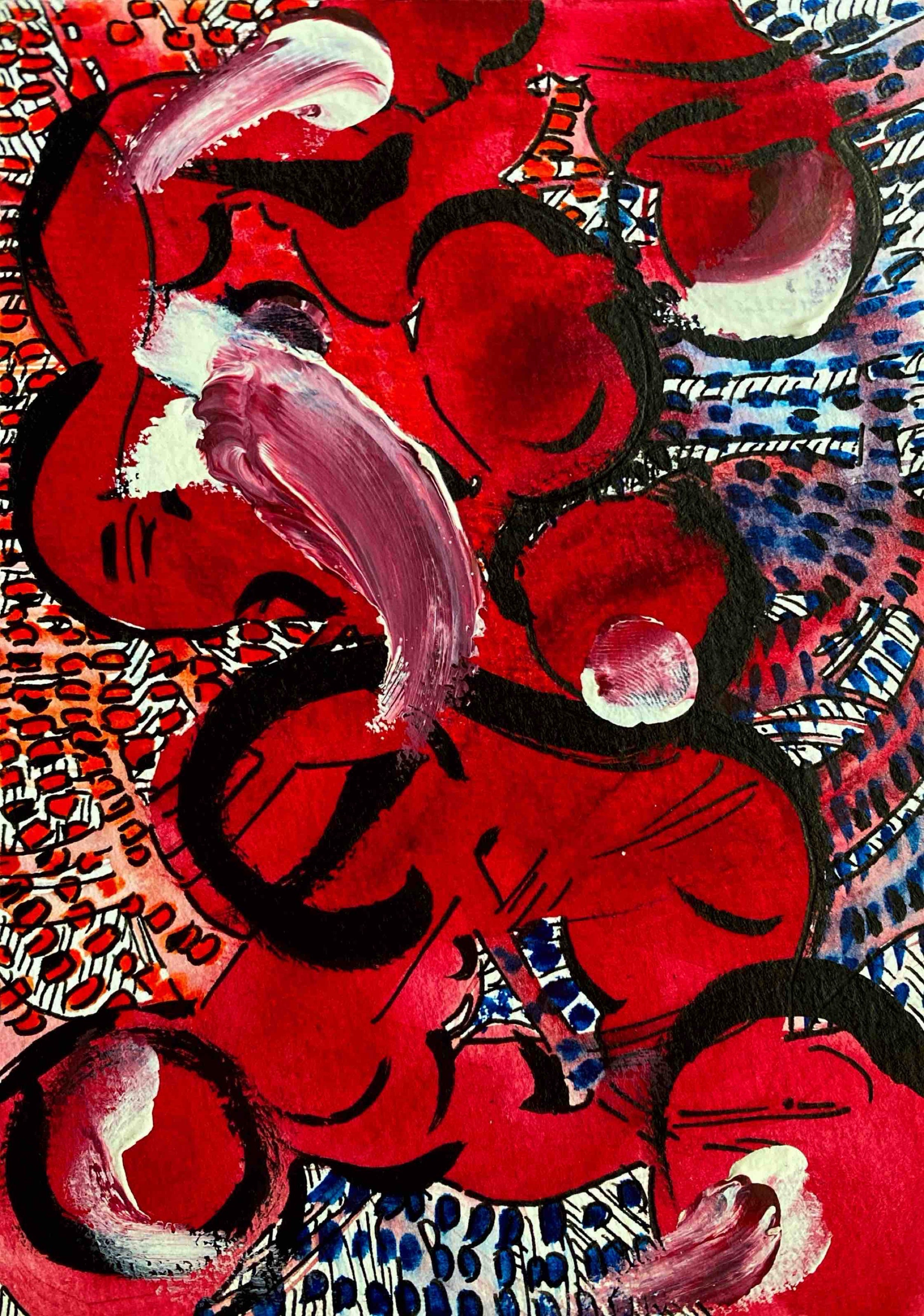
INTRODUCTION: RAVE AS RAPTURE, RAVE AS RESISTANCE
God is dead. It was killed by a dispossession of a collective belief, and then revived on modern dance floors. Today, culture is the replacement for the gaping void left behind by religion. Electronic music in particular has always positioned itself within this devout framework, and this expression has existed since the genre’s genesis.
In the beginning, early disco and house music was rife with gospel and choir samples to emphasise its otherworldly potential. One of its founding fathers, Frankie Knuckles, described the Warehouse club in Chicago as “church for people who have fallen from grace.” Another, Marshall Jefferson, went as far to posit, “DJs are the evolution of the preacher. The religions may be different, but the result is the same: spiritual enlightenment through music.”
Electronic music history is paved by ordained ministers like Byron Burke, Robert Hood, and Terrence Parker. Nightclubs have been in deconsecrated Roman Catholic or Episcopalian churches. Berghain is considered a temple in its own right, and one of many pilgrimage sites, including Bassiani, K41, and more recently, Open Ground.
Beautifully, all of this captures the spiritual weight of music and responding to it through collective movement. Its transformative potential is so clearly and deeply felt that, despite the culture’s secular nature and general distaste towards religious dogma, it resurrects the very vocabulary it once shied away from. To be human is to derive meaning from what can seem like a futile world, and to search for the sacred among the profane.
Our pre-historic ancestors, who are depicted in cave paintings wearing distinct leopard skin costumes and shaking their hair, engaged in dancing as an existential imperative, as much as scavenging for food or building shelter. They knew that dancing in large groups could strengthen social bonds and a conviction of belonging, and the feeling it evoked was intensely pleasurable. This synchronous practice gave them evolutionary advantage beyond spoken language.
Once considered wild and sacred, dancing has become thoroughly domesticated. The very industry dedicated to it has risen from a marginalised subculture at its inception to a $12.9 billion valuation as of April 2025. The culture may exist in a bubble of global capital now, but, originally, it was divorced from economic logic. For the individual, the time spent dancing doesn’t accrue capital. In fact, it even actively detracts from its accumulation given all the long, late nights that bleed into the daylight hours of productivity. This is why, throughout history, dancing was always considered a kind of barbarian, irrational practice to outside observers. But it was also always a social contagion.
In the book Dancing in the Streets, American author Barbara Ehrenreich describes European explorers who plundered into undiscovered lands to find that all of them—from Australian indigenous people, Indian villagers, to Africans who became Jamaican plantation slaves—shared this one “disturbing” ecstatic rite. Many of these colonialists found themselves strangely fascinated and revolted by these scenes of noisy impiety, and this sentiment pervaded into the institution of slavery. On a visit to Trinidad in 1845, one Englishman scribbled in his diary:
... on Christmas Eve, it seemed as if, under the guise of religion, all Pandemonium had been let loose ... Drunkenness bursting forth in yells and bacchanalian orgies, was universal amongst the blacks ... Sleep was out of the question, in the midst of such a disgusting and fiendish saturnalia... The musicians were at being of the lowest class; and all dancing, screaming and clapping their hands, like so many demons. All this was the effect of the “midnight mass,” ending, as all such masses do, in every species of depravity.
Dancing’s origins began as expressive religious rituals, celebrating sublime feeling, defiance of reason, and collective elevation through movement—only to enter political territory through the active suppression of this mass social instinct by foreign, often white oppressors. In these early observations, you can see the genealogy of moral panic that characterises the more recent dancing bans in electronic music history.
There was the 1926 law in Prohibition-era New York that made any form of “musical entertainment, singing, dancing or other forms of amusement” illegal without an expensive Cabaret License. Many people believed the regulation was a veiled attempt to prevent racial intermingling in Harlem’s jazz clubs. The license was weaponised by law enforcement in the 1960s to raid gay establishments. The Stonewall Riots protested the gross exploitation of these Cabaret Laws, which then caused David Mancuso to open his invitation-only party, The Loft.
In the 1990s, Rudy Giuliani revived these laws once again with draconian force as he criminalised nightlife during his ‘quality of life’ initiative. Eventually repealed in 2017, the Cabaret Laws symbolise almost a century of institutionalised discrimination, also censoring entire genres like Latin and electronic music during its run.
Yet another was the Criminal Justice and Public Order Act of 1994 following after the Castlemorton Free Festival in 1992, where 30,000 ravers descended into Middle England with several sound system rigs in tow for a taste of freedom. UK Parliament considered these ‘free parties’ where people danced in the open air as a sign of mass civil disobedience and targeted electronic music events by restricting the rights of assembly for groups over 100 people. This allowed authorities to shut down raves taking place at night with ‘sounds wholly or predominantly characterised by the emission of a succession of repetitive beats.’ Cultural theorist Mark Fisher believed the restriction stripped subculture of its subversion, relegating it into enclosed spaces that could be disciplined and “commercially purified.”
From its first recorded origins, this culture has been inextricably linked to both politics and religion through its negotiations with power and the divine. Those who enjoy dancing around the world sit within a lineage of people who have been repeatedly scorned for their rapture. Anyone who says otherwise neglects dance music’s heritage. The act swells with a history of ecstasy and its repression, where the socially dispossessed danced to assert their legitimacy.
Today, dancing together authentically feels like the final vestiges of opposition against a rigidly secular, painfully material world, where self-conscious performance replaces free movement, where individual atomisation replaces community gathering, where economic logic replaces generosity and dignity.
Somehow, there’s an increasingly ubiquitous, even stranger territory we’re entering that simulates all of the components of a party without any of its life force. What appears ostensibly like a community gathering has become, in fact, another accessory for the performance of an emotionally atomised individual. We’re at a crucial juncture where the cult of the self has become so strong that the very tradition which used to aid its dissolution is being co-opted to reinforce it. Many in electronic music are growing increasingly disturbed by this phenomenon.
What happens when a legacy of reverence and resistance within an art form becomes divided and to some—even desecrated? Right now, we are in the midst of a cultural reformation. Dance music is experiencing a sectarian fracturing from within.